 Most reviewed
Whales and outer islands
From the d'Albora marina
- Duration
- 2.5 hrs
- Rating
- 4.62
- Reviews
- 211
- Price
- from $60
Guides
Language
EnglishCurrency
US dollar · $GetYourGuide shows prices in the currency you choose.
Guide · Whales
Every winter and spring humpbacks travel past the heads of Port Stephens. Here is when they pass, which cruises leave Nelson Bay to look for them, and where to watch from the cliffs.
Editorial team, dolphincruiseportstephens.comUpdated October 24, 2026Reading time 6 min43 sources
Quick answer
Whale watching in Port Stephens rides on one of the great journeys of the animal world. The humpback has the longest migration of any mammal, travelling more than 5000 km between its feeding grounds in Antarctica and its breeding grounds in subtropical waters.5 Each year the east Australian humpbacks swim that route along the coast of New South Wales, and the headlands of Port Stephens stick out into their path.
How many pass depends on who you ask, so here are the official figures side by side. The NSW Government says around 2000 whales make the migration within sight of the coast each year.6 Destination Port Stephens, the local tourism body, says over 33,000 whales, mostly humpbacks, pass within a few miles of its coast.7 The last scientific survey, in 2015, estimated the whole east Australian humpback population at 24,545 whales, growing about 11% a year since the early 1990s.8
Humpbacks are not the only visitors. NSW National Parks names them as the main species, alongside southern right whales and, now and then, blue whales, minkes and orcas.9 Southern right whales come to southern Australia in winter and are increasingly found in NSW waters, often in very shallow water including bays.10
The migration
May
Whales start appearing along the NSW coast.1
June to July
The highest numbers pass in late June and July.2
June to October
The humpbacks' mating and calving months.11
September
The return journey to Antarctica begins.1
November
The whale watching season in Port Stephens runs, in the words of NSW National Parks, from May to November: from about May to July the whales travel north, and from around September to November they return south.1 Another National Parks page puts the peak around the end of June and through July, when the highest numbers can be seen from the coast.2
Be aware that the official pages do not agree to the week. The NSW Government's whale page says whales head north throughout June and in the first week of July, while a National Parks tips page starts the southbound run as early as July.1213 Take the edges of the season as soft. Destination Port Stephens, for its part, calls late May through August whale season.14
The two halves of the season feel different. On the way south whales are often seen closer to shore with their calves, moving less hurriedly than on the trip north.3 If you want to see a mother and calf, spring is the time to try. If you want the busiest stretch of the northbound run, aim for the middle of winter, and pack warm clothes for the open water.
Month by month
| Month | Daylight (h) | Darkness (h) | High / low | Wet days | Humpbacks |
|---|---|---|---|---|---|
| Jan | 14.1 | 9.9 | 27 / 20 °C | 6 | |
| Feb | 13.3 | 10.7 | 27 / 20 °C | 6 | |
| Mar | 12.3 | 11.7 | 26 / 19 °C | 8 | |
| Apr | 11.3 | 12.7 | 24 / 17 °C | 8 | |
| May | 10.5 | 13.5 | 21 / 14 °C | 8 | north |
| Jun | 10 | 14 | 18 / 12 °C | 9 | north |
| Jul | 10.2 | 13.8 | 18 / 10 °C | 7 | north |
| Aug | 10.9 | 13.1 | 19 / 11 °C | 6 | passing |
| Sep | 11.8 | 12.2 | 22 / 14 °C | 6 | south |
| Oct | 12.8 | 11.2 | 23 / 15 °C | 6 | south |
| Nov | 13.8 | 10.2 | 25 / 17 °C | 7 | south |
| Dec | 14.3 | 9.7 | 26 / 19 °C | 6 |
Nelson Head, at the mouth of the bay: mid-month daylight, the typical afternoon high and overnight low, and the count of days with 2.5 mm of rain or above, worked out by us from the NOAA archive of this Bureau of Meteorology station, 1991 to 2020.43 Season according to NSW National Parks and Wildlife Service, which gives the months shown.1
Whale cruises compared
Most reviewedFrom the d'Albora marina
 Longest
Under sail
 Shortest
Decision helper
Pick the line that fits your trip
Around 2000 whales make this journey within sight of the coast each year. At the peak of the migration, you can stand on a coastal headland and see up to 4 whales pass by every hour.
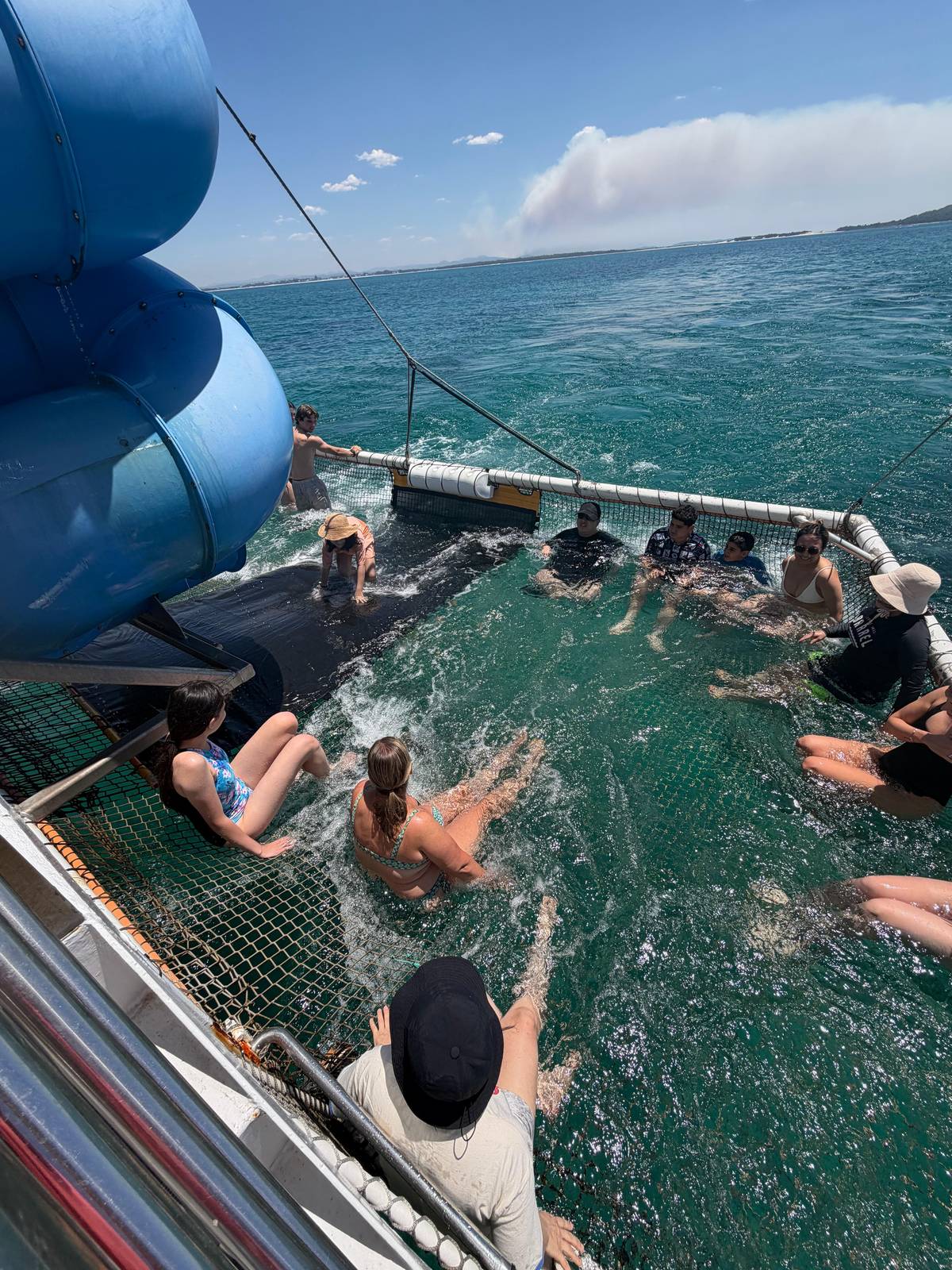
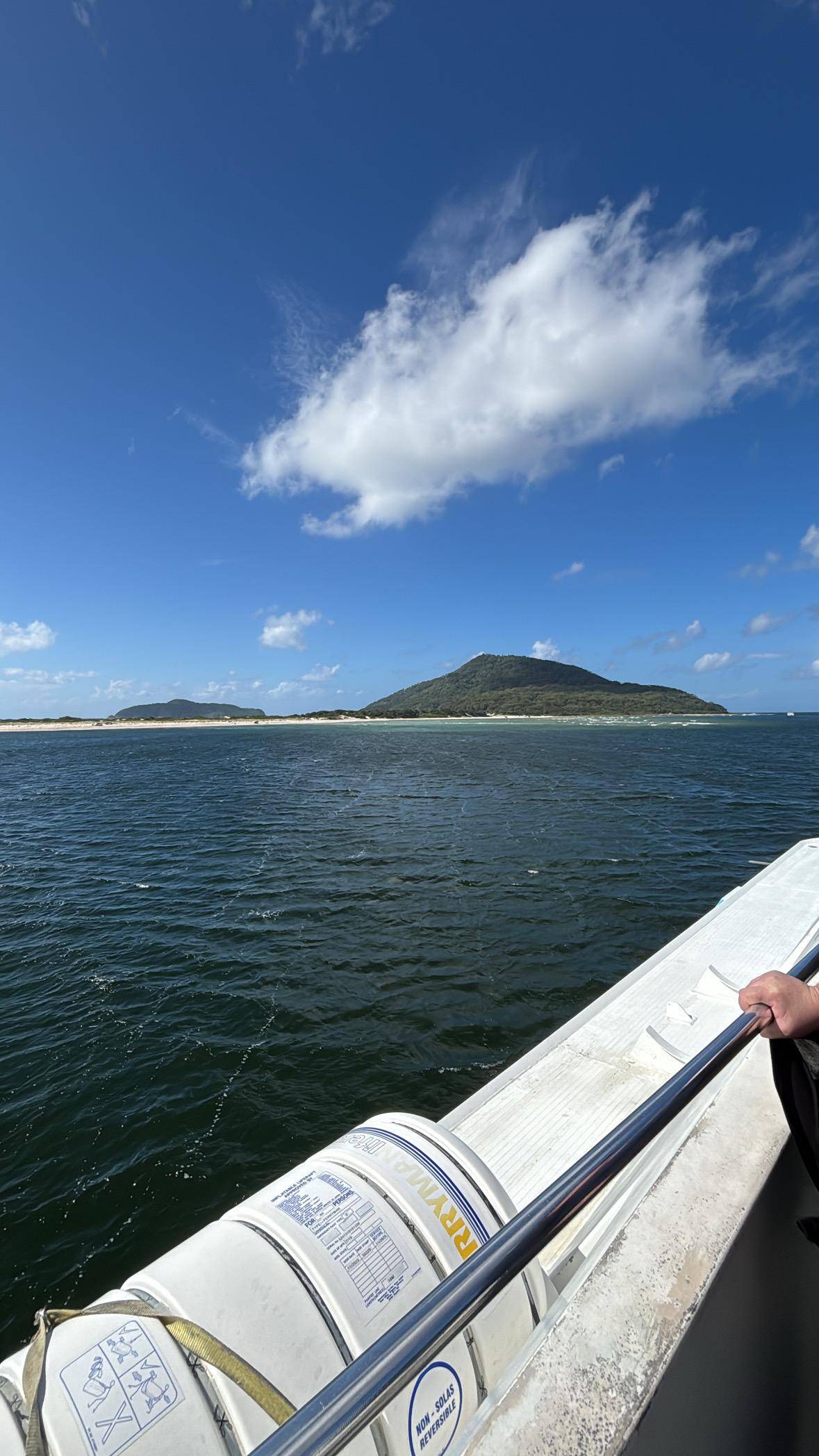
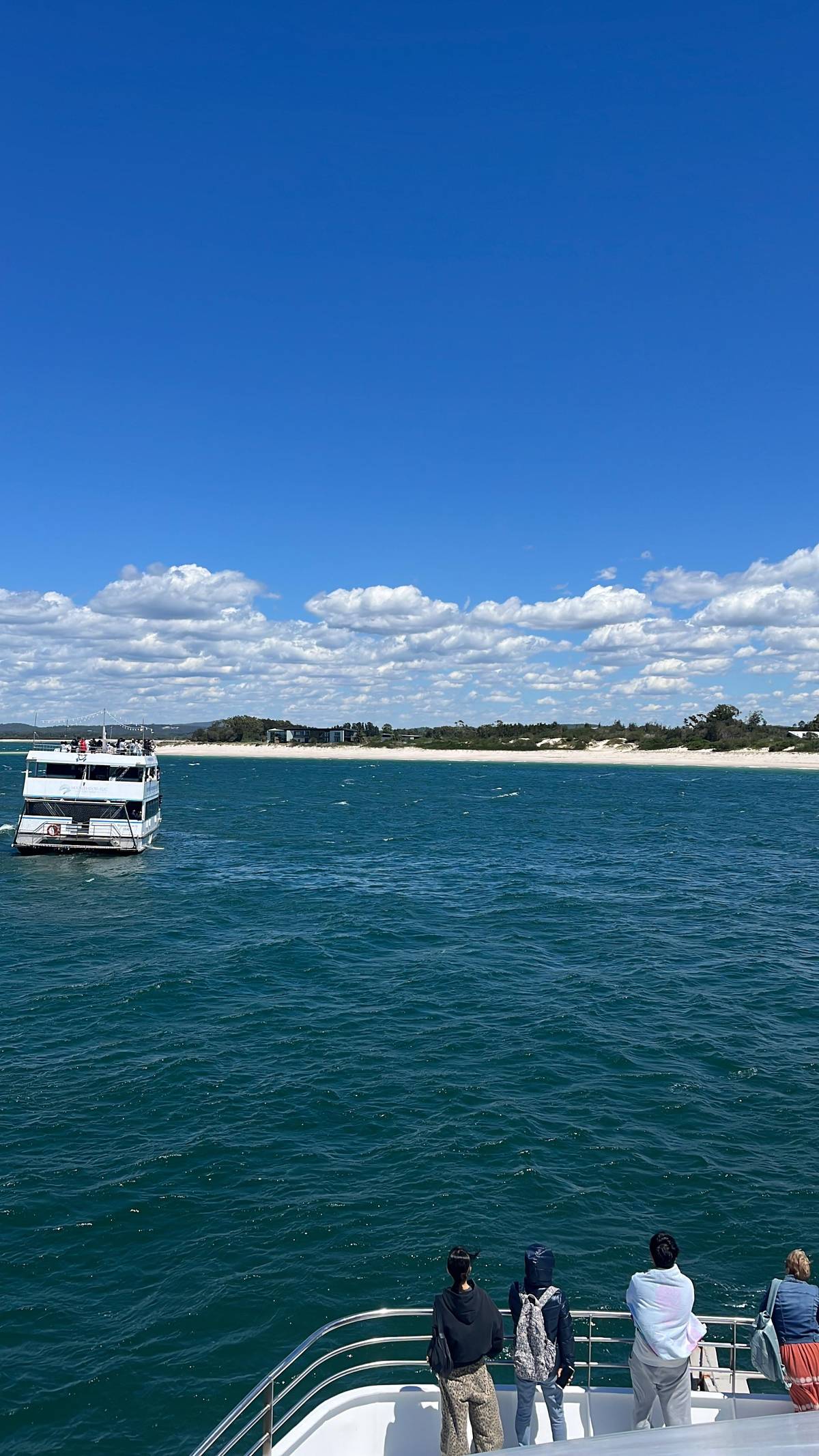
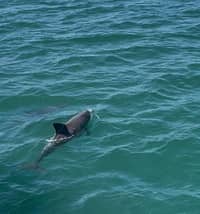
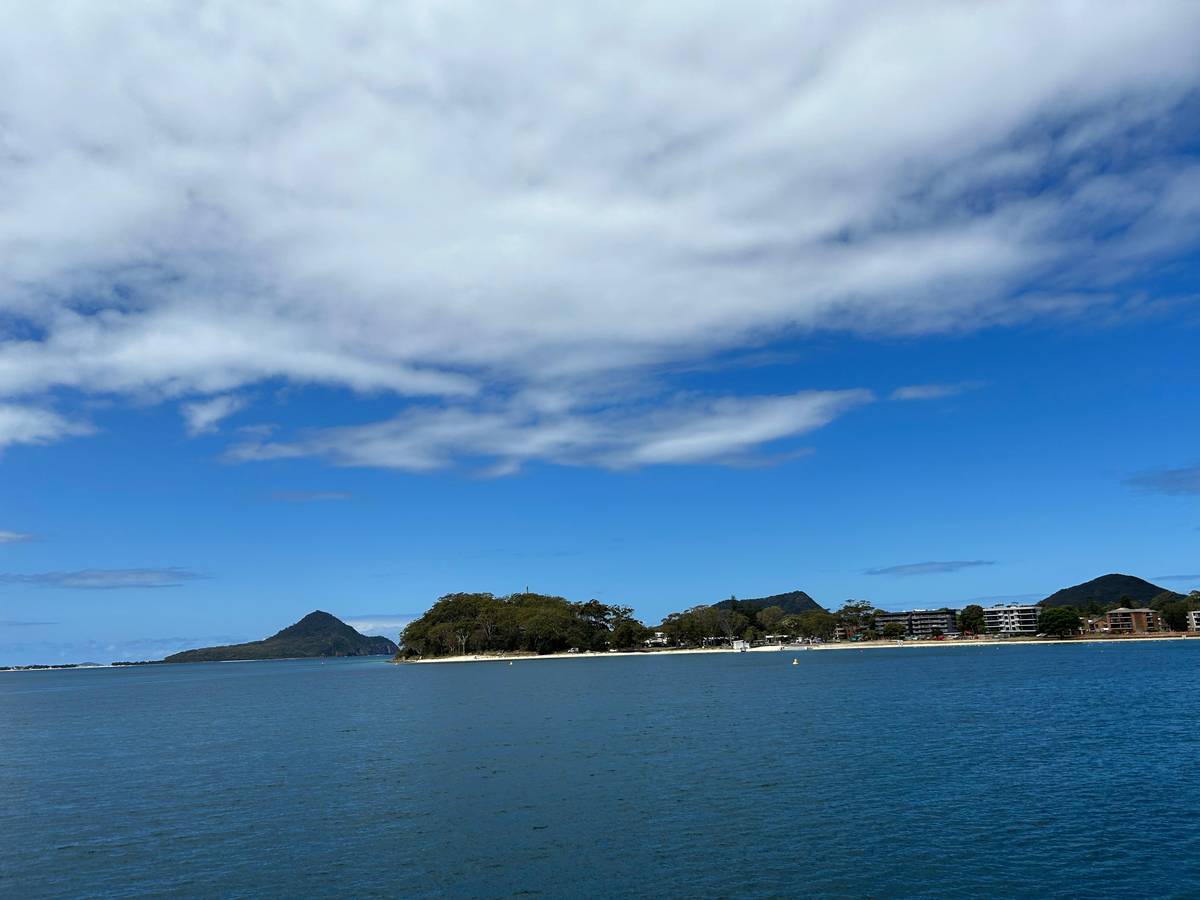
Cruises leave from the d'Albora marina in Nelson Bay and head out through the heads to the open sea. The most reviewed is a 2.5-hour whale watching and outer island cruise, rated 4.62 from 211 reviews and starting from $60. It boards at Dock C, 6 Teramby Road, 15 minutes before departure.
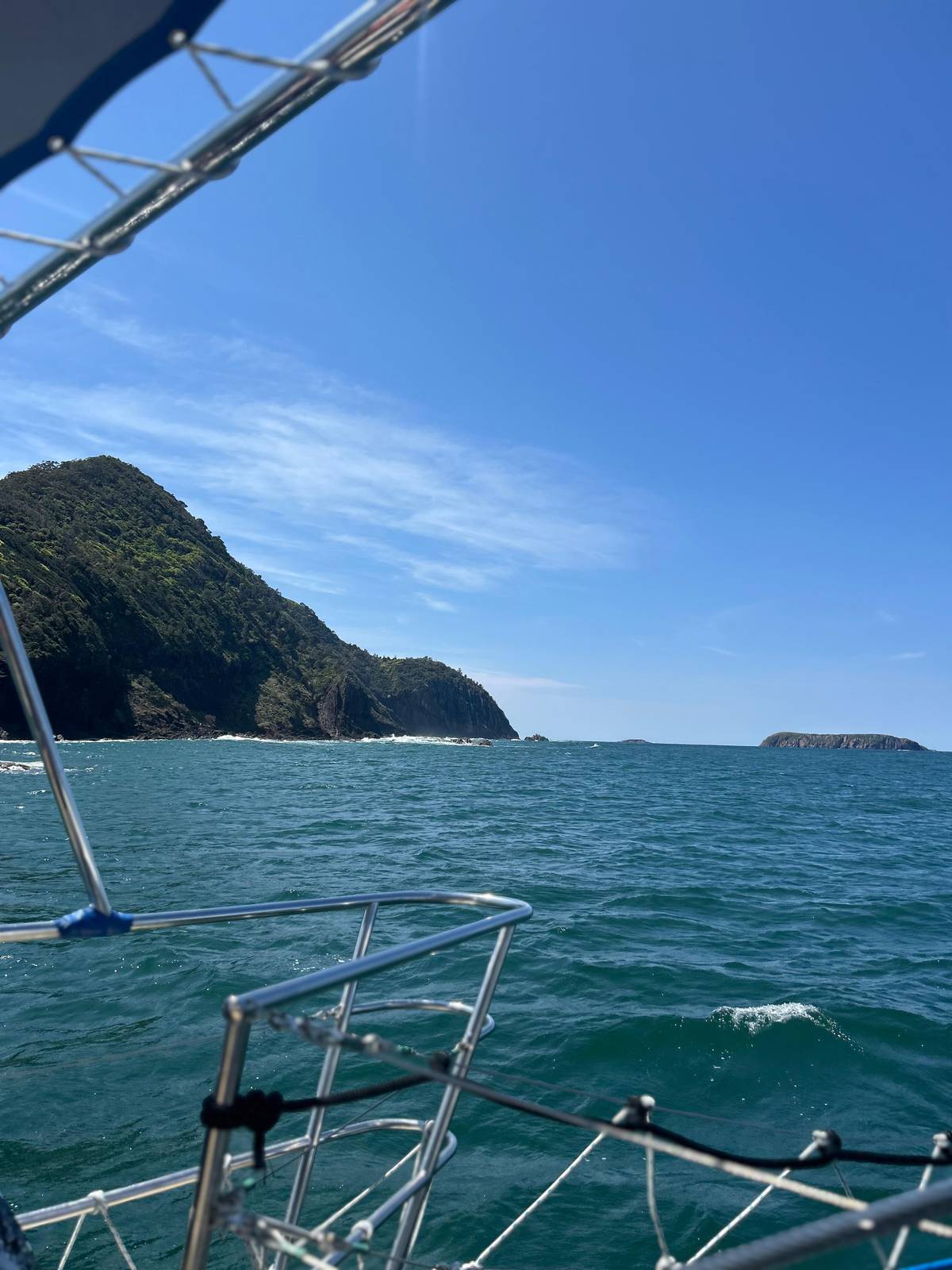
A sailing catamaran offers a longer trip that looks for both whales and dolphins: 3 hours, from $63, rated 4.53 from 56 reviews. It runs only in favourable sea conditions and with a minimum number of guests, and if it cannot sail you can move to another day or take your money back, and its listing says that between June 1 and October 31 a guest who sees no whales is offered another cruise at no extra charge.
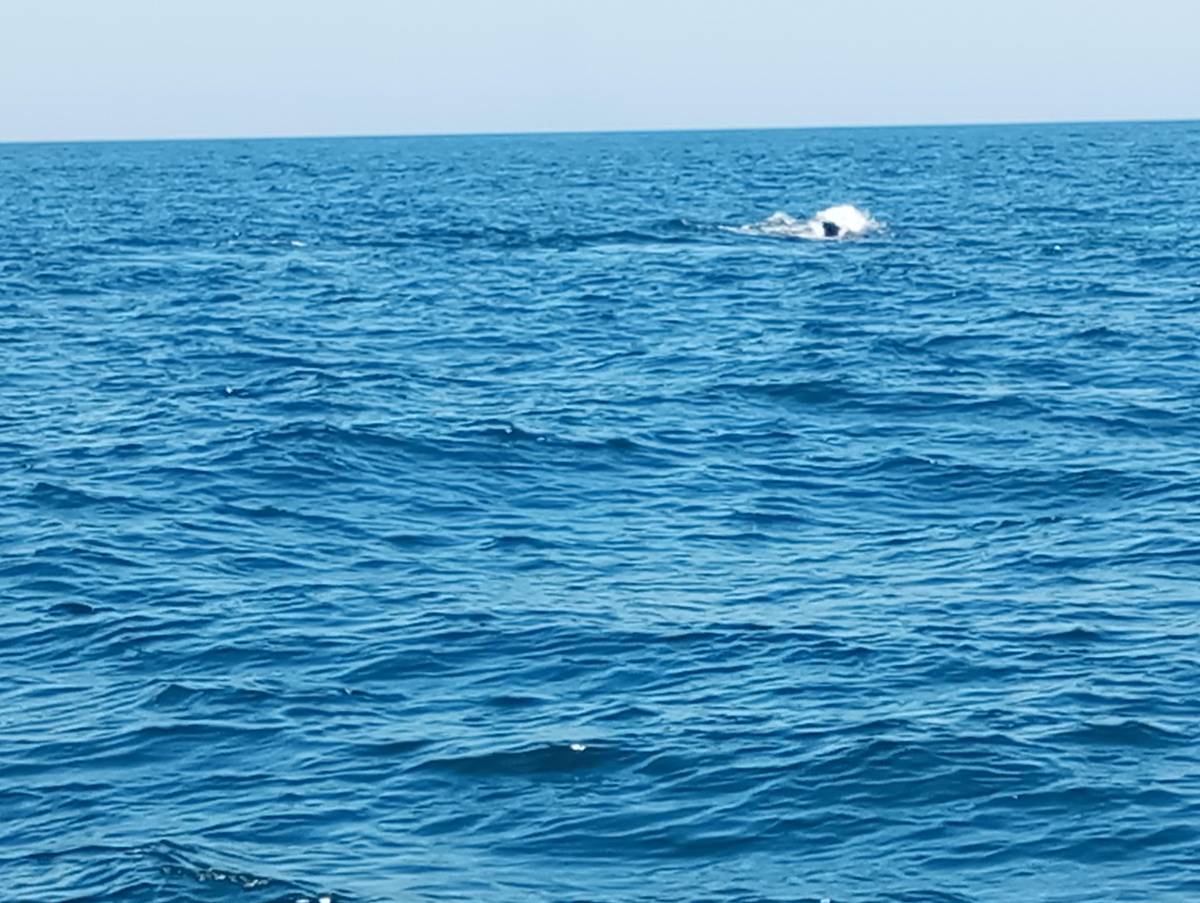
If time is short, an express cruise lasts 1.5 hours from $70 and is rated 4.58 from 75 reviews. Its listing promises a free return voucher, on a standby basis and valid for 12 months, if you do not see whales. Those are the operators' own terms; whales are wild, and the dolphin cruise operator states plainly that sightings cannot be guaranteed.
Map
Where the cruises leave Nelson Bay and the two headlands at the mouth of the bay, the coast south past the koala sanctuary to the Stockton Bight dunes, and the drive up from Sydney.
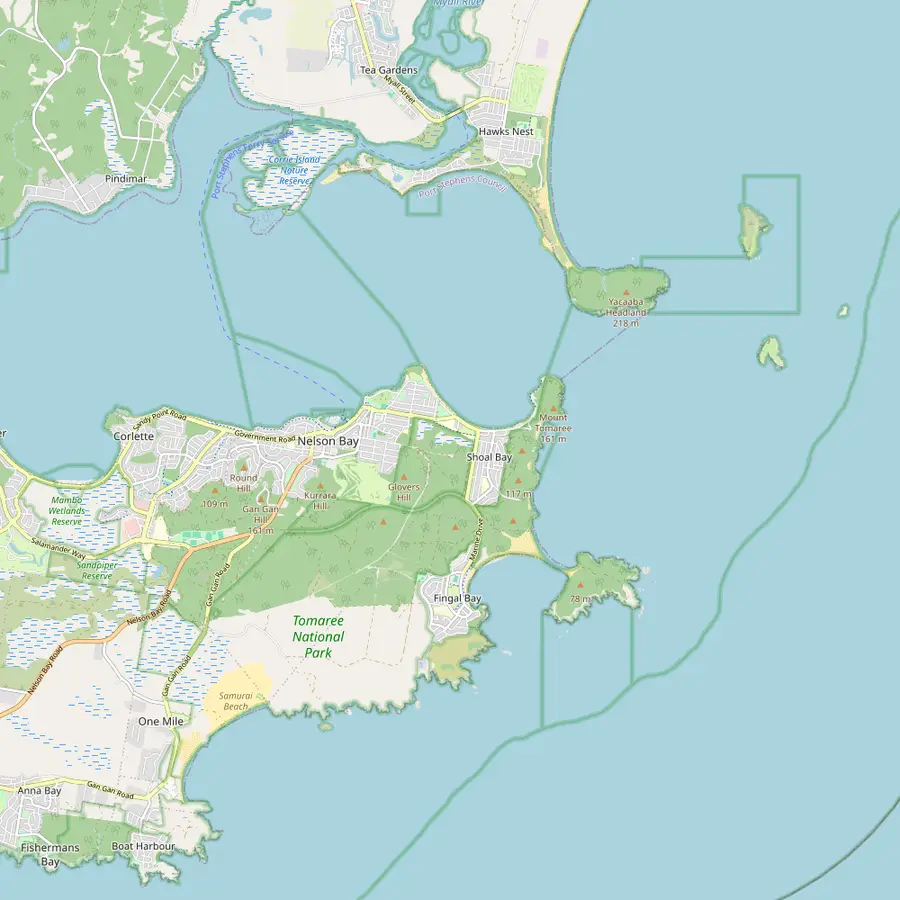 1d'Albora Marina2Shoal Bay3Tomaree Head4Yacaaba Head5Zenith Beach6Fingal Bay
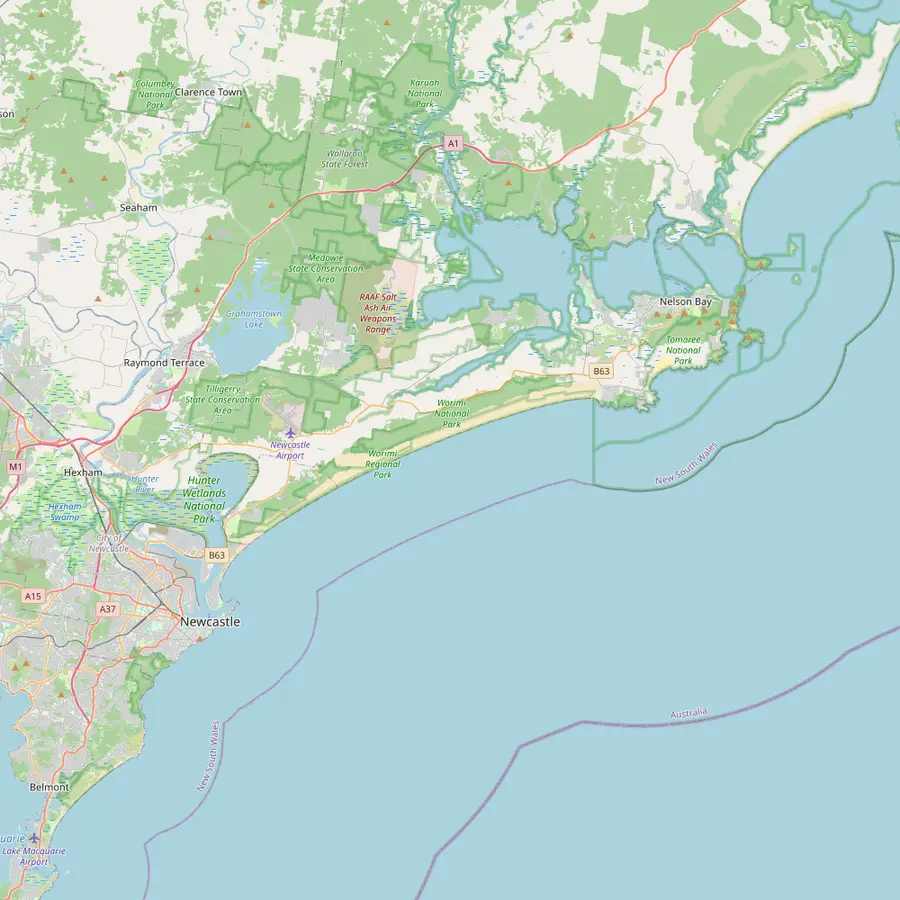 7Nelson Bay8Koala Sanctuary9Anna Bay10Birubi Point11Newcastle Airport12Stockton
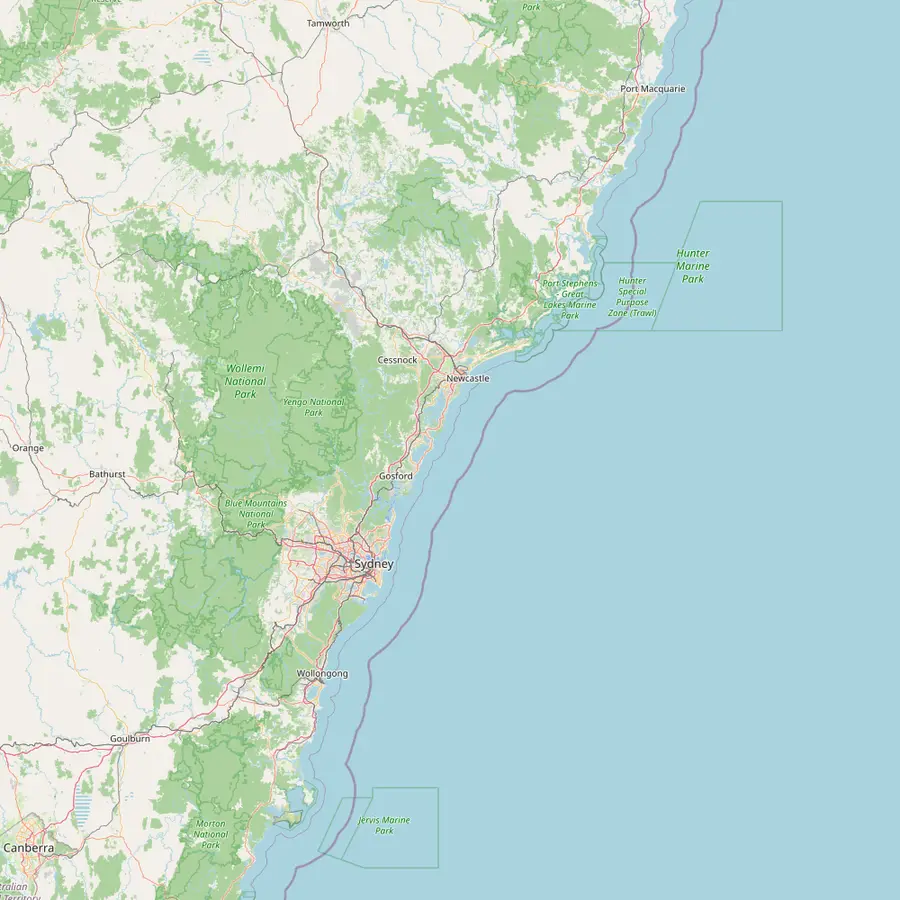 13Sydney14Newcastle11Newcastle Airport7Nelson Bay
6 Teramby Road, a launch point for dolphin and whale watching tours.22
In Google Maps ↗A 40-minute drive from Newcastle Airport.23
In Google Maps ↗161m above the entrance; whale watching from May to November.4
In Google Maps ↗The northern headland, in Myall Lakes National Park.24
In Google Maps ↗A marine park sanctuary zone where dolphins can be seen.25
In Google Maps ↗A patrolled beach; never cross the spit when water covers it.2627
In Google Maps ↗Wharf 1 at 40 Victoria Pde, where the dolphin cruise boards.
In Google Maps ↗562 Gan Gan Road, One Mile, beside the koala hospital.28
In Google Maps ↗The lower car park on James Paterson St, where sandboarding trips start.
In Google Maps ↗An Aboriginal Place whose name means Place of the Southern Cross.29
In Google Maps ↗About 30 minutes by car from Nelson Bay.30
In Google Maps ↗Stockton Beach runs 32 km from the Hunter River to Birubi Point.31
In Google Maps ↗An easy 2.5-hour drive south of Port Stephens.32
In Google Maps ↗Buses link Newcastle Interchange with the airport up to 11 times a day.33
In Google Maps ↗Checklist
Cost calculator
Starting totals for each whale cruise by group size.
Total from$119
per traveler from $60
Check availabilityfree cancellationEach total multiplies the lowest per-person starting price on GetYourGuide by the size of your group and converts it at the European Central Bank's daily rate; your date and option set the final amount.
Video
The YouTube player stays switched off here until you press play.
New South Wales sets clear distances for every boat around whales. A vessel is in the caution zone within 300 metres of a whale and may come no closer than 100 metres.15 If a calf is present, boats may not enter the caution zone at all.16 Only 3 vessels may be in the caution zone around an animal at once; the others wait their turn.34
The rules also cover what happens when the whale decides to come closer. If a whale approaches, the vessel must slow to minimal wash speed, move away or disengage its gears.35 Jet skis must keep at least 300 metres away, and everyone must stay at least 500 metres from a whale that is mostly white in colour.1719
Drones count too. Above marine mammals the minimum is 100 metres for drones, 300 metres for fixed-wing aircraft and 500 metres for helicopters.18 These distances come from the NSW Biodiversity Conservation Regulation 2017, based on the national whale and dolphin watching guidelines of the same year.36 Respecting them is part of a good trip, not a limit on it.
Whales can be spotted from the cliffs here as well. NSW National Parks recommends taking binoculars on the Tomaree Head Summit walk, whose summit is 161 m above the Port Stephens entrance, and gives May to November as the best months.4 The walk is 2.2 km return, takes 1 hr 30 min to 2 hrs and is Grade 5, so it is steep.37
Further south, Tomaree National Park names Fishermans Bay, the Iris Moore lookout and picnic area, Boat Harbour and Birubi Point as the best places to spot humpbacks between May and November.38 National Parks describes Iris Moore lookout as one of the best spots for close-up whale watching.39 Destination Port Stephens adds Birubi Point at Anna Bay for dolphins all year and humpbacks in season.40
Land watching rewards patience. At the peak, the NSW Government says you can see up to 4 whales pass a coastal headland every hour.6 Look for the blow first: a humpback's is small and bushy, up to 4 metres tall.11 Stay well back from the edge while you scan; National Parks asks whale watchers to keep at least 5 m from cliff edges and rock platforms.41
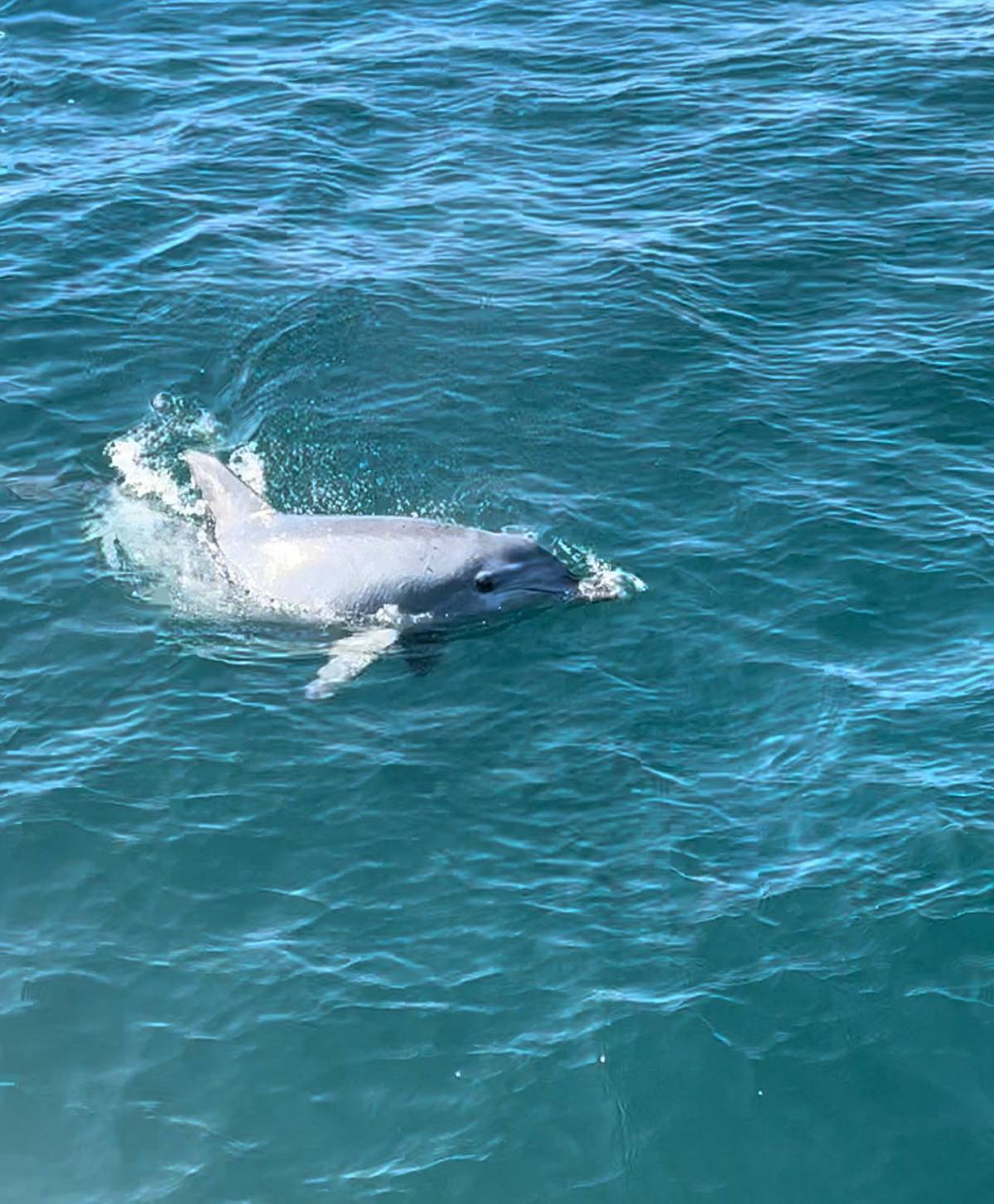
If your visit falls outside the whale months, the bay still has resident dolphins. The NSW Government says around 90 to 120 Indo-Pacific bottlenose dolphins live permanently in Port Stephens.21 The dolphin cruise from Nelson Bay lasts 1.5 hours and starts from $33, about half the price of the whale cruises.
In season, dolphins and whales can share a trip. Broughton Island, north of the heads, is a whale watching spot in the winter months, and dolphins can be seen there all year.42 A longer whale cruise often heads out past the islands, while the dolphin cruise stays inside the bay.
Whichever trip you choose, prepare for the open sea. The whale cruise operator recommends a motion sickness remedy before boarding and a light meal beforehand. Another operator advises taking tablets at least 1 hour before you board. A warm layer and a windproof jacket make winter mornings on deck far more pleasant.
Meet the locals
1.5 hours from Wharf 1, Nelson Bay, boom net included; cancel free until a day before.
May to November. Whales head north from about May to July and south from around September.1
Late June and July. NPWS says the highest numbers pass then.2
Mainly humpbacks. Southern right whales and sometimes blue whales, minkes and orcas also appear.9
100 metres. Closer than 300 metres a boat is in the caution zone.15
Yes, from the headlands. Tomaree Head summit is a recommended lookout from May to November.4
No. Whales are wild; some listings offer another trip if you see none.
From 1.5 to 3 hours. The cruises compared here last 1.5, 2.5 or 3 hours.
Sources
Keep reading